
Our Students
Our students are not spectators of learning. They are active creators, collaborators and personalities with a voice.
We are proud of our students and their families. From day one they realise that learning a language goes hand in hand with the growth of their personality and their self-esteem.
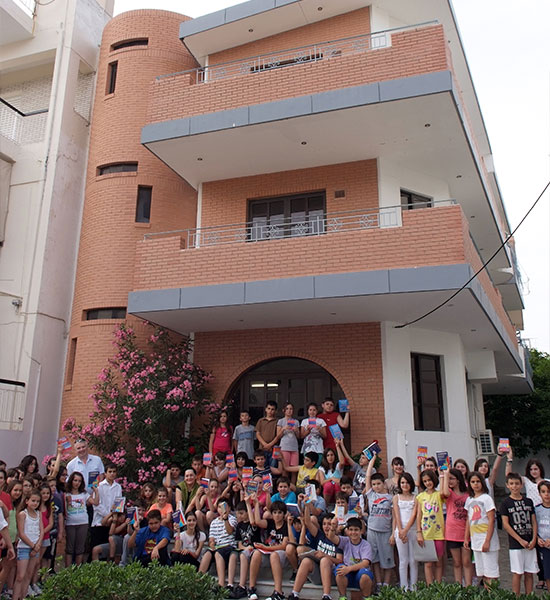
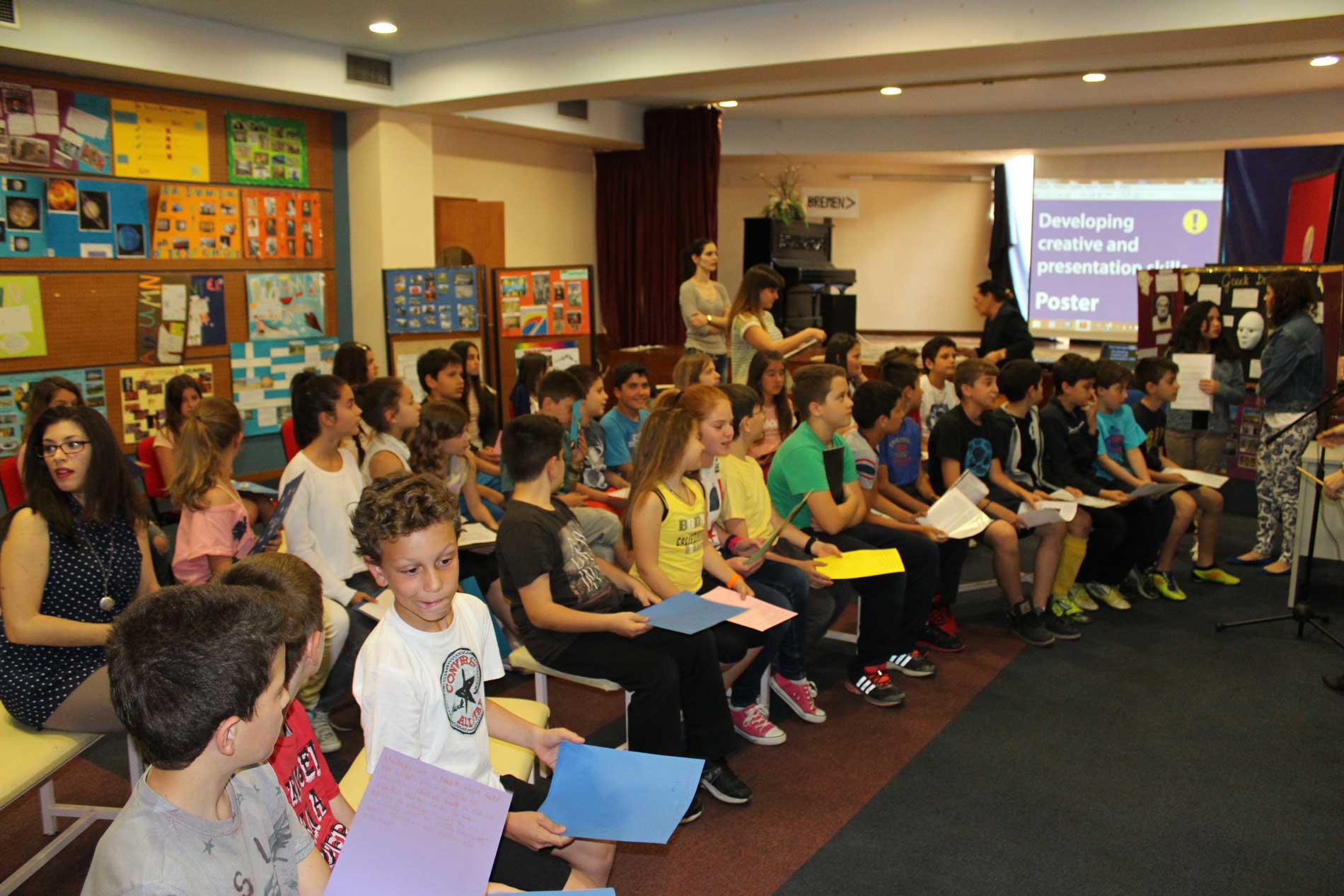
The student at the centre of learning
Every time they speak, listen and write, our students “are not merely exchanging information — they are organising a sense of who they are and how they relate to the social world” (Norton, 2014).
They realise they have a voice. They are important members of the school community and, while studying the language, they are helped to take ownership of their own learning. From the age of seven, all the way to Proficiency level, they are given a wide range of opportunities to demonstrate their knowledge and talents — to analyse, evaluate and create.
Who our students become
Active creators
Not spectators of learning — they take part, create, research and present.
Autonomy
They build learner autonomy: choosing materials, using technology and owning their learning.
Collaboration
They work in teams, take on roles and engage in peer learning.
Voice & confidence
They realise they have a voice — and use it in presentations and discussions.
Critical thinking
They analyse, evaluate and create — from age seven through to Proficiency.
Personality
Language learning grows together with personality and high self-esteem.
Learner Autonomy: 70 classes, nine months of research
After years of research we involve our students in projects in the form of flipped classroom activities, presentations, discussions, peer teaching and in-class research projects.
70 classes undertook a nine-month project titled “What does learner autonomy mean to you?”. At the end of it, our students gave their own definitions of learner autonomy — which we still discuss and revisit as our school evolves.
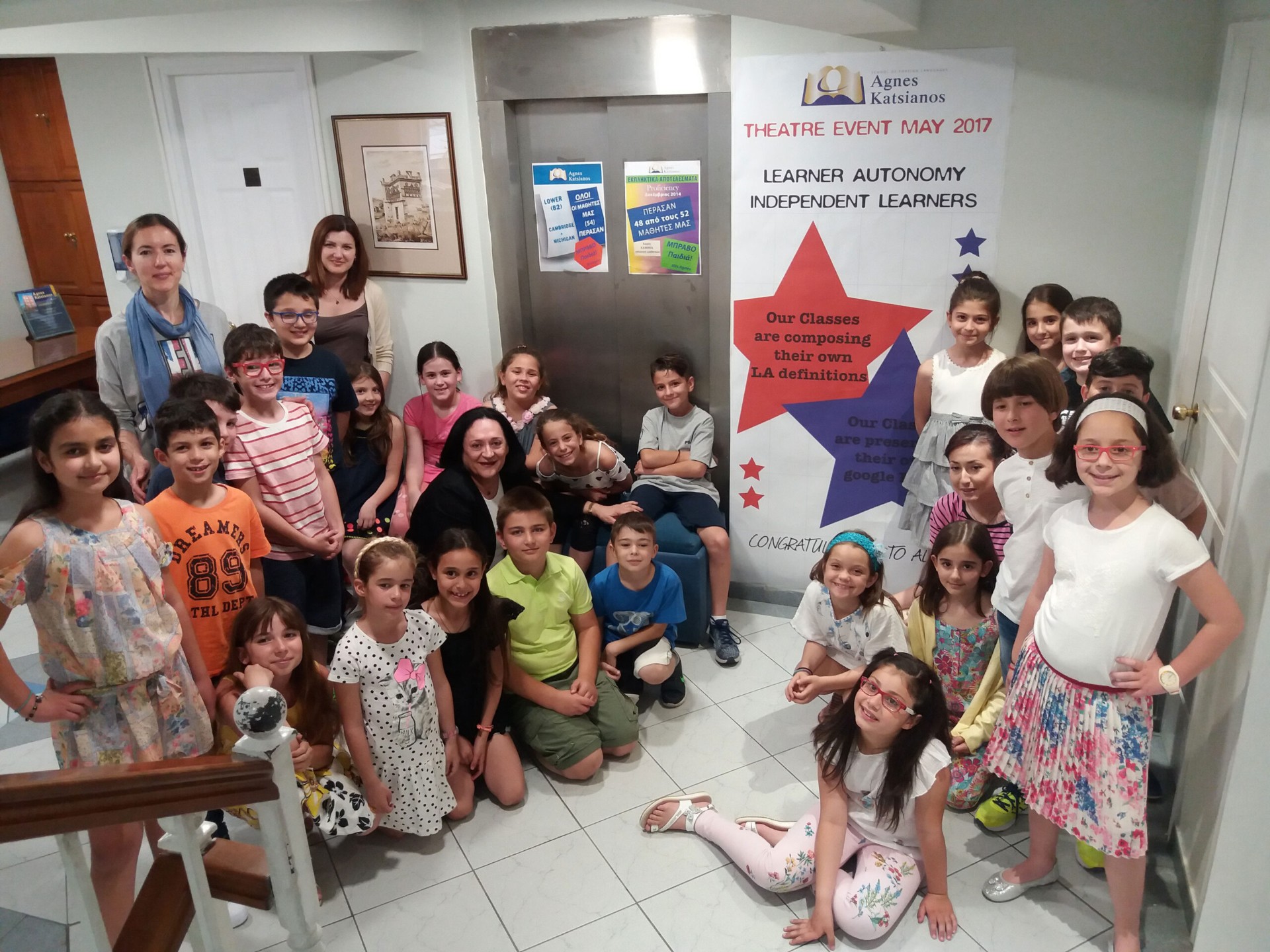
What they say themselves
“Learner Autonomy is our willingness to undertake independent learning in terms of selecting materials and seeking out learning opportunities using technology and different learning resources. It is our love to share our learning experiences outside the classroom with our classmates and teachers and make ongoing progress.”
“What we love about Agnes Katsianos School is the perfect blend of tradition and technology! We write, collaborate, present at the board — but at the same time we work with Padlet, PowerPoint, Lumen and GPT. AI helps us learn English in smart, creative and modern ways. We really feel lucky!”
“From my very first day at Agnes Katsianos School, I felt in awe. And I was only 7 years old. I remember thinking that this foreign-language school is not just "a school" — it is a place where I have to be organised, responsible, ready to give my best self. As the years went by and I moved up through the classes, every new school year came with excitement and… anticipation: Who will my British teacher be? What will this year's surprise be? A new project? A new activity? What role will I have this time? Which team will I work with? What will we research? This school did not just teach me English — it taught me how to think, how to collaborate, how to create. I gained excellent command of the language, but also confidence, tools and skills that stay with me to this day. I now study at one of the best universities in the world — and I feel that I owe a great part of this success to my English school. It shaped me, inspired me and prepared me for the future.”
From our British teachers
The British teachers at our school maintain that Agnes Katsianos School students excel in every aspect of the language and radiate confidence in their conversation skills.
“Having taught students from all over the world, I have to admit that the students of Agnes Katsianos School are the most hard-working and autonomous.”
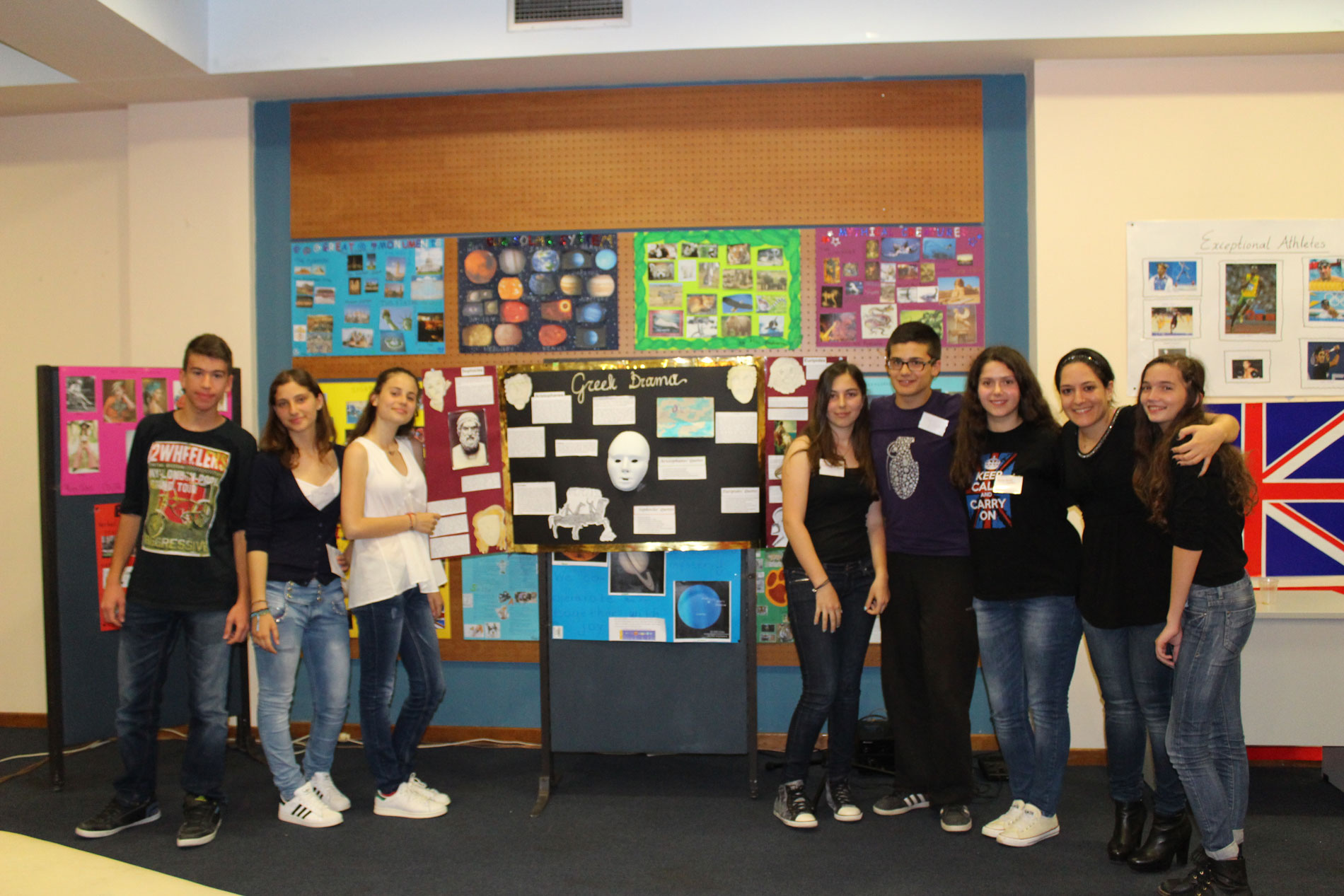
Teams, roles, presentations
In class, students work in teams, take on roles, contribute to discussions and respect different points of view. They present projects, collaborate and learn from each other through peer learning.
Skills for the future
Through their active involvement, students develop skills that stay with them for life.
- Self-confidence
- Critical thinking
- Communication
- Responsibility
- Creativity
- Teamwork
- Initiative
- Presentation skills
- 21st-century skills
How our students live their learning
Presentations & Projects
Flipped classroom activities, presentations, discussions and in-class research projects.
Discussions & Debates
Genuine dialogue, respect for different viewpoints and exchange of ideas.
Peer Teaching
Students teach and learn from each other — peer learning in practice.
Storytelling & Interviewing
Narrative tasks and interview projects that develop real communication.
Festivals & Escape Rooms
Experiential events that connect language with culture and teamwork.
Digital Tools & AI
Using technology, GPT and digital tools for research and creative work.
Moments from school life
Presentations, projects, events and creative moments of our students across classrooms and school halls.